Written by BIMCRONE

What Makes BIMCRONE Different ?

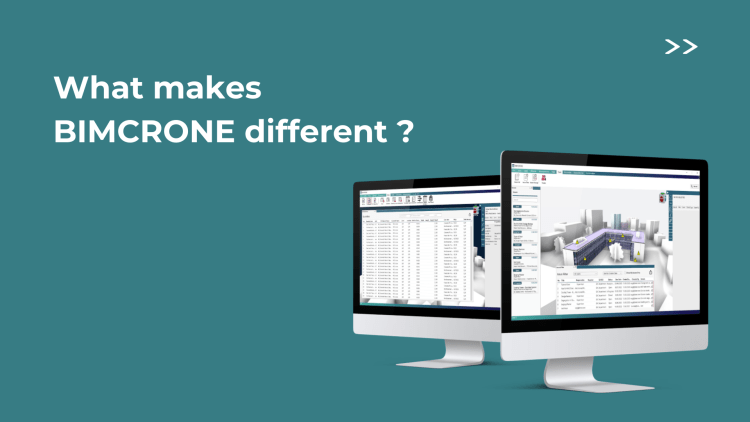
When we look at the construction sector, inefficiency is almost tangible and visible. According to statistics, the rate of inefficiency in construction projects is 47%, and the rate of projects with delays is around 60%. Even for a relatively small building, the data collected over its life cycle can be, as you can imagine, a very big data. Monitoring and controlling such a volume of data is extremely difficult. The size of the problem increases exponentially in companies working on many projects at the same time. The solution to this problem with the common mind all over the world is digitalization. There are different software or software groups to create a common data platform in the industry and to offer a digital project management solution. BIMCRONE, which started its journey as an R&D project, attaches importance to differentiation while feeding from its valuable competitors. BIMCRONE’s value proposition has four competitive advantages that we want to offer as most important:

1-BIMCRONE considers the life cycle of buildings as a whole

By creating a digital twin of a project, BIMCRONE provides its users with up-to-date information with different functions that will benefit from the planning phase of the building, construction, operation, restoration and even demolition and recycling processes. Stores, reuses and recommends detailed data of the structure on a single platform.

2- BIMCRONE integrates the data and keeps it on the model


BIMCRONE makes it possible to view real-time information on a single platform, from material details used on each wall of a building, to delay reports, and even the percentage of construction progress at any given moment. When choosing any structural element on the 3D model, the quantity, timing, cost, etc. In addition to information, you can easily access corporate archive and projection data.

3-BIMCRONE executes the construction project in 360°


BIMCRONE is a collaboration environment. It allows the information produced by different teams to be accessed instantly with other teams depending on their roles and authorities. The data pool that can be accessed by contractors, design teams, field teams, audit teams, managers, technical offices and subcontractors provides a sharing environment. In fact, other stakeholders of the project such as public institutions, finance, insurance can easily access this information when necessary and follow the development of the project on the same platform.


4-BIMCRONE is user friendly.

BIMCRONE has the most user-friendly interface and makes it easy for team members with various technical backgrounds to use. It has various language options including Turkish. BIMCRONE works like a business partner, not just a software solution. It pays attention to knowledge sharing, experience transfer and joint development among the teams it works with.


Bige UZUN

0
Written by himes

How BIM Can Help In Project Management?

Project management is not an east task, but BIM is here to help from planning phase to delivery. Cost evaluation, delay analysis and more are less time-consuming

Read More
0
Written by himes

Levels of BIM

We mentioned that the goal with Building Information Modeling (BIM) is to prepare and sustain the digital twin of the building. There are two different categories for determining the BIM status of companies and projects, sizing and leveling. I will touch on the size issue in another post, this post is about leveling.

So what is this leveling issue?

Leveling over BIM is measured by taking into account the fact that the information about the structure is in the electronic environment and the rate of working together of the teams.

BIM Level 0 :

It is the situation where there is only a 2D drawing of the structure and no digital content is produced or recorded.

There is no data sharing between teams. It is the case where all stakeholders follow the project components through paper outputs in separate copies (versions).

BIM Level 1 :

It is the level where the 3D drawing of the structure exists and limited data is produced electronically.

It is the scenario where there is no data sharing between the teams and the team/stakeholders follow the project information through their own copies.

BIM Level 2 :

3D architectural plan, business plan, etc. of the building. It is the situation in which information about the structure is produced, stored and tracked electronically.

It is the method in which data sharing between teams is done with transferable file types. Any updated data is transferred to all stakeholders via e-mail, ftp, server, etc. There is no simultaneous sharing of information between teams.

BIM Level 3 :

It is the situation in which all critical information such as 3D architectural plan, business plan and cost-quantity from the components of the building are electronically produced, stored and followed.

It is a complete collaboration between teams. It is the state of producing the same data in a complete integrity and together, where all teams can see the same data in its latest and updated form from the same environment.

This level is called openBIM, it is the ideal and top BIM level.

BIMCRONE is a solution that provides service at BIM 3 level, with the ability to access the digital contents of the structure from a single environment. With its mobile version, it allows to receive construction site data instantly, and to integrate all data with cloud infrastructure. It allows all users, from the construction site to the technical office, from the contractor to the top management, to access the same data with different authorizations.

0
Written by himes

What is BIM? What is it good for?

Our product is BIMCRONE, our job is to manage building projects.
First of all, I would like to start with what is Bim, BIM is not just a market name, in its clear form Building Information Modeling, in the Glossary of Sustainable Building Materials, “A set of technologies, processes for creating, managing and using information about the construction and project throughout the building’s life cycle. and politics.” has been defined as.

As you can see in the image, the process starts with the stages such as programming the structure and design, and goes through many different steps until its construction. Moreover, in the case of the restoration and management of the building, this process is run over and over again, and the need for data continues. (In this article, I will not specifically evaluate the current situation in Turkey, I want to go over what should be.)

Building Information Modeling (BIM), with its Turkish translation, aims to digitally trace the process of the building from the idea stage to the demolition stage. In this process, many different data need to be produced and managed.

The most important components of a building, architectural plan, business plan and cost-quantity information should be created and managed in digital environment. We started the development of BIMCRONE with the aim of following the effects of the changes in this data both within itself and on other building components, creating versions, managing them and presenting them to all stakeholders of the project in the most up-to-date way. With BIMCRONE, it is possible to monitor, manage and report the digital life of the project. As it can be understood from the CRONE (witch) part that we are inspired by, it allows you to get magical results such as 20% profit with the management you will make over the digital data of the building.

Building Information Modeling is not a software, technique or product, it is a way of doing business, digital projects that can be created with the help of software, techniques and / or products and their collaboration. Different levels of BIM have been defined by different institutions. You can see these levels in the image below. I will explain these levels in detail in a different article.

0
1 2